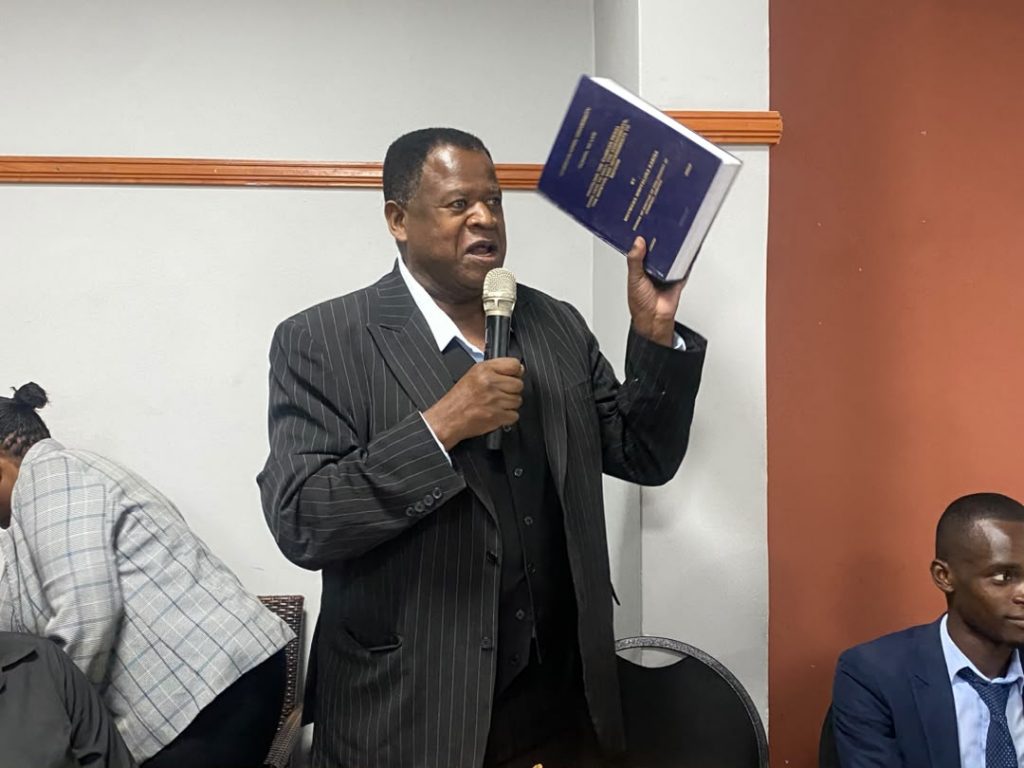
 Following the consultative meeting held on 2nd July in Chipata, the Zambia Law Development Commission (ZLDC) has continued its nationwide stakeholder engagements with a consultative meeting held today, 1 October 2026, at Mkango Golfview Hotel in Lusaka.
The Lusaka meeting was held as part of the Commission’s comprehensive Institutional Impact Assessment of its law reform activities from 1996 to 2026.
The meeting brought together key stakeholders to reflect on the impact of three decades of the Commission’s research, law reform recommendations and stakeholder engagement, and to assess the extent to which these efforts have contributed to Zambia’s legal, institutional and socio-economic development.
Speaking at the meeting, ZLDC Director and Commission Secretary, Mrs. Hope Ndhlovu Chanda, welcomed stakeholders and emphasised the importance of assessing not only the number of law reform projects undertaken, but also what difference the Commission’s work has made.
What difference has this work made?
Mrs. Chanda noted that over the past 30 years, the Commission has undertaken more than 120 law reform projects covering areas including constitutional and governance reforms, criminal justice, family law, human rights, electoral law, commercial regulation, environmental protection, customary law, public administration and emerging areas such as digital governance.
The assessment seeks to examine what happened to the Commission’s recommendations after they left the institution, including their adoption, implementation and practical impact on institutions, communities and the people of Zambia.
The Director further highlighted that while some recommendations have contributed to significant legislative and institutional reforms, others have not been fully adopted or implemented due to factors such as competing priorities, resource constraints and institutional capacity.
During the meeting, questions were asked to measure the Commission’s impact on stakeholders. Stakeholders responded with varying testimonies about how long they have interacted with the Commission and the nature of those interactions.
Among them, students said the Commission’s work had inspired their research, while also outlining gaps that continue to affect the institution, such as financial constraints and other capacity challenges.
The consultative process provided an opportunity for stakeholders to share their experiences, evidence and perspectives to help the Commission validate and enrich the findings of the assessment.
The assessment is being undertaken as part of the Commission’s commemoration of 30 years of institutional existence and service in advancing law reform in Zambia. It aims to generate evidence-based recommendations that will help strengthen future law reform processes and ensure that the Commission’s work remains responsive to Zambia’s changing legal and socio-economic environment.
As Zambia looks towards emerging challenges in areas such as artificial intelligence, digital governance, climate change and economic transformation, the assessment will also help inform how the Commission can continue to deliver effective, evidence-based and impactful law reform.
#LawReforms#ZLDC@30
See less