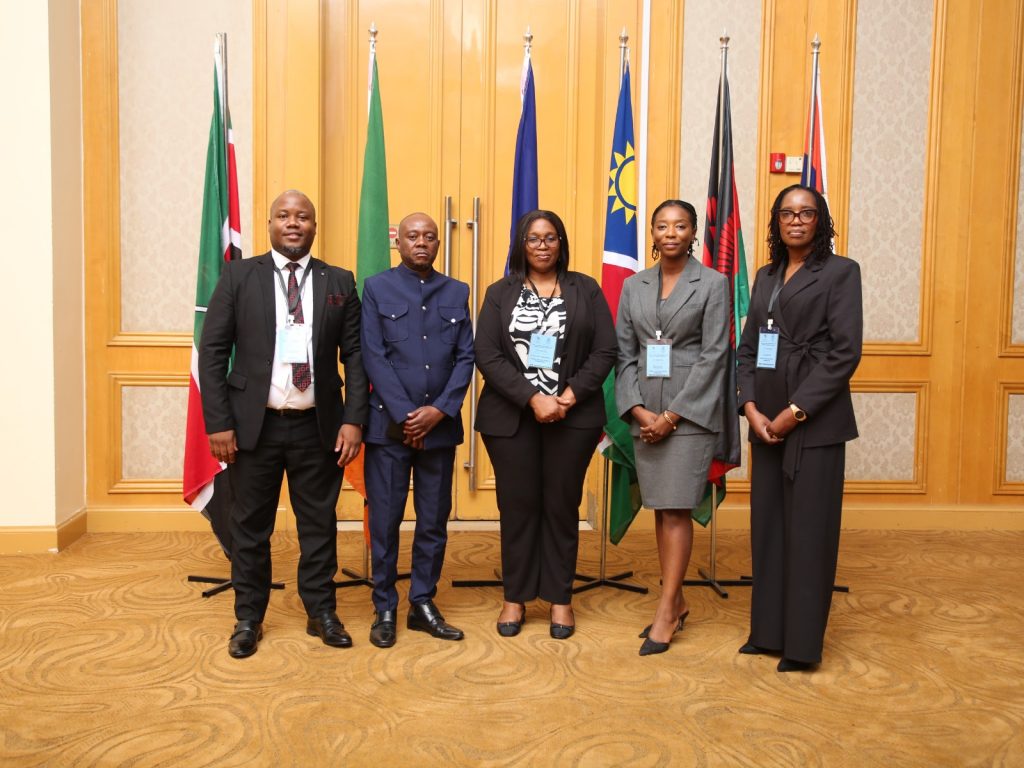
From the 20th to the 21st of November 2025, in Lilongwe, Malawi, the 2025 Association of Law Reform Agencies of Eastern and Southern Africa (ALRAESA) Law Reform Conference turned its spotlight to a subject that is quickly shaping legal systems across Africa: the rising influence of Artificial Intelligence (AI) in public governance and justice delivery. Zambia was represented by a delegation from the Zambia Law Development Commission (ZLDC), led by Madam Justice Ruth Chibbabbuka, who joined law reform agencies from across the region to reflect on how technology is changing the role of law reform institutions.

The first discussion in which Zambia participated centred on the ethical implications of AI. As a discussant, Madam Justice Chibbabbuka reflected on how AI could affect vulnerable groups in the justice system. She reminded the audience that technology must serve constitutional values, noting that “digital reform is not meaningful if it deepens inequality.” Her remarks emphasised the need for safeguards that protect people when governments adopt automated systems. Her contribution set the stage for the presentations that followed.

In the second ZLDC appearance, Mr. Yamikani Ngoma delivered a presentation titled “Building Inclusive Law Reform Institutions in Africa in the Age of Artificial Intelligence,” in which he outlined how African law reform bodies can harness emerging technologies to strengthen inclusion, transparency, and institutional responsiveness. His presentation highlighted that the rapid advancement of AI has already begun reshaping public institutions, creating both opportunities and responsibilities for law reform agencies. He underscored that AI can enhance legal research, streamline drafting processes, and broaden public participation, particularly for marginalised groups, if institutions adopt it deliberately and ethically.
Mr. Ngoma stressed that law reform institutions cannot effectively contribute to digital governance if they themselves remain technologically underprepared. As he remarked, “We cannot advocate for the responsible use of technology if the very institutions mandated to guide it are left behind.”
The final ZLDC presentation, titled “The Human Mandate in an AI-Driven Law Reform Environment,” was delivered by Ms. Lina Jere. She emphasised that the adoption of AI in public decision-making must always reinforce, rather than replace, human responsibility. She noted that law reform agencies must ensure that “technology supports accountability, not hides it.” Her remarks underscored that public institutions must adopt AI in a manner that strengthens, not undermines, public trust.

Across all sessions, one central message emerged: African law reform agencies must be proactive in shaping how AI is regulated. Innovations are moving quickly into courts, administrative systems and public services, and it is law reform bodies who must ensure that these tools strengthen justice, accountability, and public trust.
As Zambia continues to explore the opportunities and risks presented by emerging technologies, ZLDC remains committed to steering law reform that is ethical, forward-looking and grounded in the protection of people’s rights.